Cell Culture Media for Stem Cell Research
Cell culture media for stem cell research are defined nutrient systems that support stem cell maintenance, expansion, and directed differentiation in laboratory workflows. CellCultureMedia supplies research-focused media, sera, supplements, buffers, and reagents for academic labs, biotech R&D teams, core facilities, and contract research groups. Buyers can source ready-to-use formulations, xeno-free options, serum-containing systems, and custom configurations aligned with internal protocols. This page helps procurement managers and scientists compare common media types, documentation needs, packaging formats, and supply considerations. For broader catalog browsing, visit stem cell media or review available items through our product catalog.
What this category/application covers
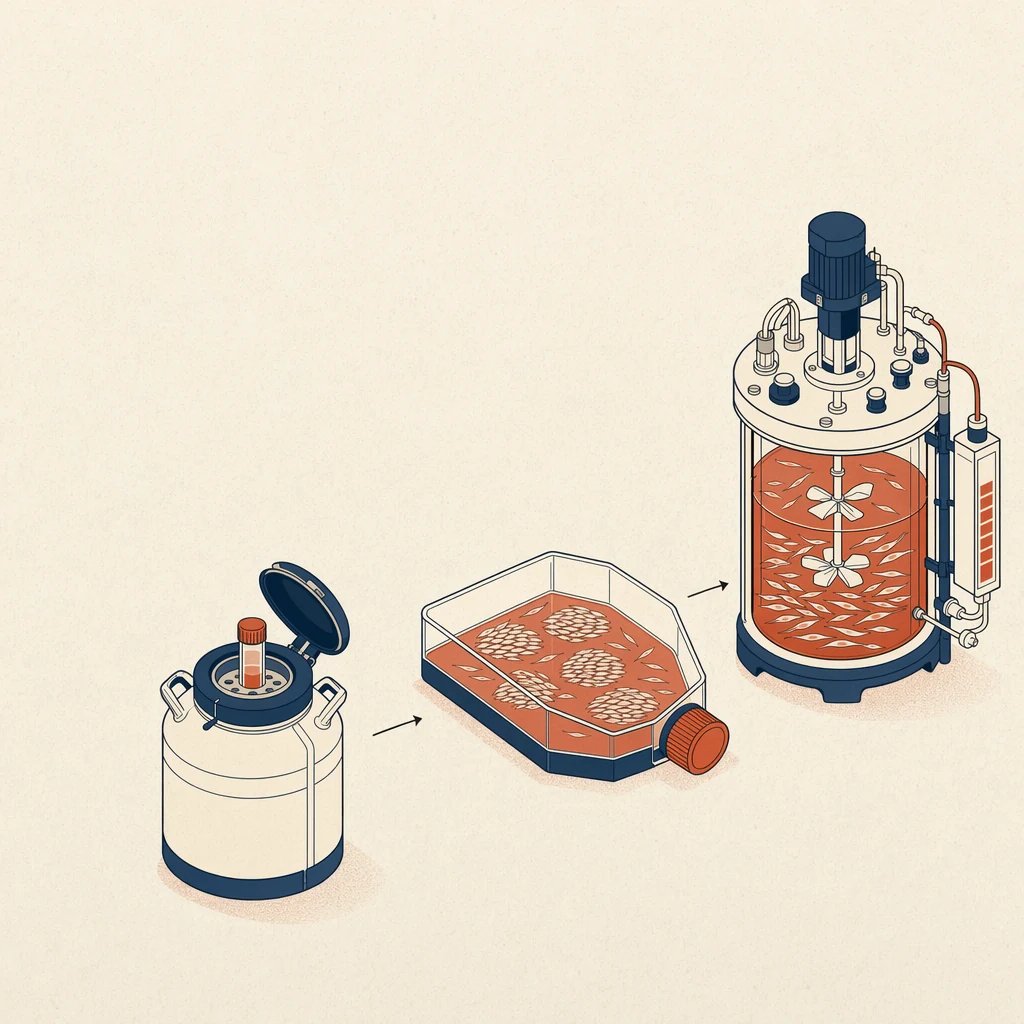
Stem cell research workflows often require multiple media systems across one project: maintenance medium for pluripotent cultures, expansion medium for mesenchymal stromal cells, lineage-directed differentiation media, cryopreservation support reagents, dissociation solutions, antibiotics where appropriate, and qualified serum or serum replacements. The application also includes media for neural, hematopoietic, epithelial, and organoid-related research models, depending on the lab’s experimental design.
Procurement teams typically evaluate this category by cell type, regulatory research context, lot size, formulation transparency, documentation, lead time, and price stability. Scientists usually focus on morphology, growth profile, marker retention, passage consistency, and compatibility with plates, matrices, and dissociation methods already used in the lab. CellCultureMedia supports both buying groups by helping align technical requirements with practical purchasing needs, including free worldwide shipping for eligible orders and responsive documentation support.
Related supplies are available under cell culture reagents and sera, allowing laboratories to consolidate sourcing for media, supplements, and routine culture inputs.
Common products and formulations
- MSC expansion media: Formulations for mesenchymal stromal cell culture in research settings, including serum-containing and xeno-free options for labs comparing donor lots, passage windows, and expansion performance.
- iPSC maintenance media: Defined media designed for pluripotent stem cell maintenance, colony growth, and routine passaging in feeder-free or matrix-supported workflows.
- Neural research media: Base media and supplement systems used in neural progenitor maintenance, neuronal differentiation research, and co-culture model development.
- Hematopoietic stem and progenitor cell media: Media systems commonly paired with cytokine cocktails, serum alternatives, or specialized supplements for suspension culture and colony-related assays.
- Serum and serum alternatives: FBS, human-derived serum options where available, and defined supplements selected according to species sensitivity, assay variability, and institutional sourcing policies.
- Supporting reagents: Dissociation reagents, buffers, antibiotics, matrix-compatible additives, cryopreservation components, and custom supplement packs that help standardize daily lab operations.
How to choose
Start with the cell type and experimental endpoint. MSC expansion studies often emphasize attachment, doubling time, donor-to-donor consistency, and passage stability. iPSC maintenance workflows usually prioritize colony morphology, low spontaneous differentiation, compatibility with the lab’s substrate, and predictable passaging. Neural and hematopoietic workflows may require carefully matched supplements, growth factors, and base formulations, so confirm whether the protocol depends on serum-free, xeno-free, chemically defined, or serum-containing conditions.
Next, assess operational fit. Procurement managers should confirm pack size, shelf life, storage temperature, minimum order quantity, available lead time, and whether the supplier can support repeat lots or advance lot reservation. R&D teams should review whether the formulation is ready-to-use or requires supplement addition, whether components are sold separately, and whether the medium has been used with similar culture vessels and matrices.
For labs transferring a published method or internal protocol, exact formulation matching may matter. For labs optimizing a new model, side-by-side qualification can be more useful than price comparison alone. CellCultureMedia can support both standard ordering and tailored sourcing through custom media requests, including adjustments to packaging, supplements, or formulation targets when technically feasible.
Quality and documentation
Stem cell research media should be purchased with documentation that supports traceability and internal quality review. Common documents include certificate of analysis, sterility statement, endotoxin information where applicable, osmolality range, pH range, storage conditions, expiration dating, and component or origin information when available. For sera and animal-origin components, buyers may also request country-of-origin details, filtration data, and lot-specific performance references.
Documentation needs vary by institution. Academic labs may require core facility approvals and purchasing records, while biotech R&D teams may require supplier qualification files, change notification practices, and consistent lot availability. CellCultureMedia maintains a practical documentation process designed for procurement review and bench use. Quality-related questions, document requests, and batch traceability inquiries can be directed through our quality documentation resources before or after purchase.
When qualifying a new medium, we recommend recording seeding density, passage number, substrate, split ratio, feeding schedule, morphology observations, and assay readouts. These records make it easier to compare lots, repeat experiments, and justify long-term purchasing decisions.
Why work with CellCultureMedia
- Application-focused sourcing: We help labs match media, sera, and reagents to MSC, iPSC, neural, hematopoietic, and other stem cell research workflows.
- Independent global supply: Buyers can source across multiple formulation types without being locked into a single platform or purchasing bundle.
- Free worldwide shipping: Eligible orders receive free worldwide shipping, helping international labs plan landed cost more clearly.
- Procurement-ready support: We can provide quotations, product documentation, batch details, and availability updates for purchasing review.
- Flexible ordering paths: Standard products, related reagents, and tailored media discussions can be coordinated through one supplier relationship.
- Responsive technical communication: Our team understands the questions scientists ask before switching, qualifying, or scaling a culture workflow.
Recommended Categories
For stem cell research workflows, customers most often need media and reagents from these categories. Each ships free worldwide.

Common questions about stem cell research
What is the best medium for stem cell research?
Do you offer xeno-free options for stem cell workflows?
Can I request documents before placing an order?
How should labs compare serum-containing and serum-free media?
Can CellCultureMedia support recurring supply for stem cell research labs?
Discuss your stem cell research requirements
Tell us about your cell line, target scale, and regulatory context. We will recommend specific products, share documentation, and quote pricing.
Request a Quote